How Small Business Data Platforms Actually Drive Growth: What 15+ Years of CRM Implementations Taught Us
Over two decades of CRM implementation experience have taught us one thing: business growth is rarely limited by a lack of customer data. More often, it's limited by how quickly teams can access, understand, and act on the information they already have.
That's what a small business data platform is for. It's not about collecting more data. Most SMBs already have plenty, scattered across inboxes, spreadsheets, POS systems, and whatever tool ran last quarter's email campaign. It's about unifying that data into something a real person can use on a Tuesday morning to make a better decision.
In this article:
What a Small Business Data Platform Actually Does
Strip away the marketing language, and a customer data platform for small business does three things: it pulls data from every channel where you interact with customers (email, website, point of sale, social, support tickets), it merges that data into one profile per customer, and it makes that profile usable inside your CRM, your marketing tool, or wherever your team actually works.
The part vendors gloss over is the “merges” step. In practice, unifying data means resolving duplicate records, matching a customer's website visit to their email address to their in-store purchase, and doing it without human review of every record. That's a harder engineering problem than it sounds, and it's exactly where a lot of cheaper tools fall short. They connect data sources but never actually reconcile the records, so you end up with three half-complete profiles of the same customer instead of one accurate one.

Why Most SMBs Wait Too Long to Adopt One
The most common reason we hear for delaying is “we want to clean up our data first” or “let's wait until after the busy season.” In our experience, that moment never comes. Data doesn't get cleaner sitting in a spreadsheet, and there's always another busy season on the horizon.
The businesses that get the most value start with the data they already have, imperfect as it is. A data platform with messy records is still a significant upgrade over no platform at all and customer information scattered across five different tools that don't talk to each other.
The Real Benefits, Based on What We've Actually Seen
The generic list (“better customer understanding,” “improved marketing efficiency”) isn't wrong, it's just vague enough to be meaningless. Here's what it actually looks like in practice:
Fewer dropped handoffs. The scenario we see constantly: a customer calls in, the person who handled their last conversation is out, and whoever picks up has no visibility into that history. That's not a training problem, it's a systems problem, and it's solved entirely by having one shared, current profile every team member can see.
Marketing spend that stops going to the wrong people. Once you can segment customers by actual behavior instead of guesswork, you stop sending the same offer to your best repeat buyers and a first-time visitor who bounced off your pricing page. That's not a small efficiency gain. For SMBs running tight marketing budgets, it's often the difference between a campaign that pays for itself and one that doesn't.
Faster response to shifting demand. When purchase and engagement data updates in near real time instead of in a monthly report someone has to build manually, you notice a shift in customer behavior while it's still actionable, not three months after it happened.

Can a Small Business Actually Afford a Data Platform?
Yes, but “afford” depends on what you're comparing it to. A lot of CDP and CRM pricing was built for enterprise budgets and then loosely “scaled down” for small business, which usually just means fewer features at a still-substantial price.
That's not the same as being built for SMBs from the ground up. Quantum CRM Starter, for example, runs on Microsoft Power Platform, infrastructure most businesses running Microsoft 365 already have in place. That's why it can deploy in days instead of the months a typical enterprise CDP rollout takes, and why it's priced at a fraction of what comparable enterprise tools cost per user. There's no new infrastructure to stand up and no six-figure implementation project. You're connecting a platform to systems you already run.
Where SMBs Actually Get This Wrong
After enough implementations, the mistakes start to look familiar:
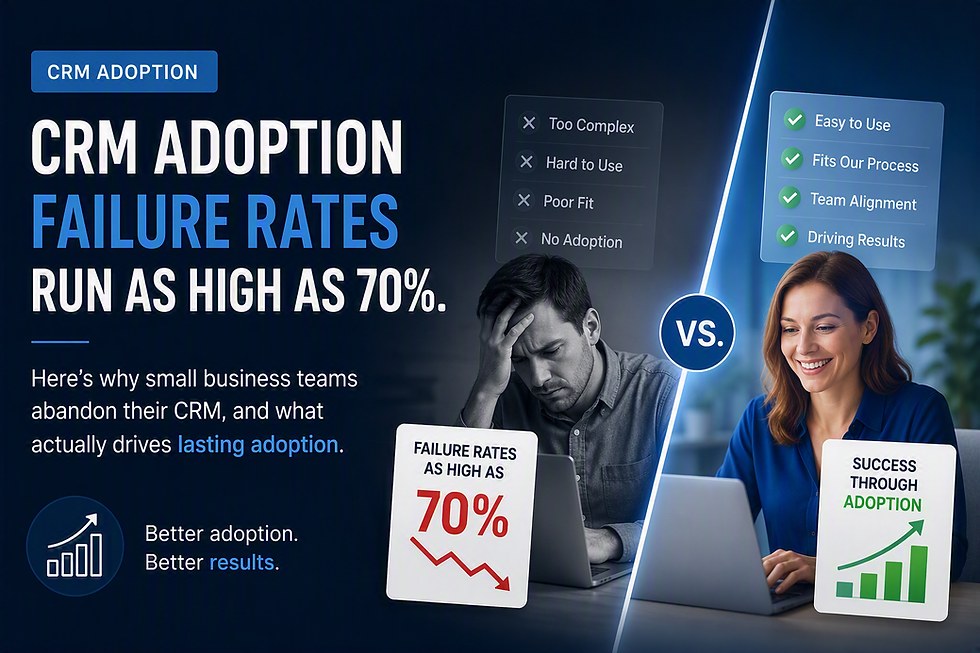
Buying more platform than the team will use. If your salespeople need a training program just to log in, adoption fails regardless of how good the underlying technology is. The right platform is the one your least tech-comfortable employee can navigate within a few hours, not the one with the longest feature list.
Treating segmentation as a one-time setup. Customer segments built once and never revisited go stale within a quarter. The platforms that deliver ongoing value are the ones where segmentation gets checked and adjusted monthly, not set at onboarding and forgotten.
Skipping the “who owns this” conversation. Data platforms fail more often from unclear ownership than from bad technology. When nobody is assigned to keep records clean, duplicate and outdated data pile up until the platform becomes more trouble than the spreadsheets it replaced.
Getting Started Without the Overwhelm
1. Map your actual data sources first: website, POS, email, support tickets, social. Most businesses have more sources than they initially list.
2. Pick a platform sized for you, not a scaled-down enterprise tool. Fast deployment and native integration with the tools you already use (Outlook, Teams, SharePoint) matter more than a long feature checklist.
3. Connect your highest-value sources first. You don't need every channel integrated on day one. Start with the two or three that touch the most customers.
4. Build segments around real behavior, not assumptions about who your customers are.
5. Automate the follow-ups your team is currently doing manually. That's usually where the platform pays for itself fastest.
6. Assign an owner for keeping the data clean, and revisit segments on a set schedule.
The Bottom Line
A small business data platform isn't valuable because it collects more data. Every business already has more data than it uses. It's valuable because it turns scattered information into decisions your team can act on the same day: who to call first, what to send them, and when the moment to reach out has actually arrived.
After two decades of implementing CRM and customer data systems for businesses of every size, the pattern is consistent: the platforms that deliver real growth are the ones sized to fit how a small business actually operates, not enterprise tools with the price tag lowered.
If you're evaluating a customer data platform for small business, Quantum CRM is built on Microsoft Power Platform specifically for this: fast to deploy, native Microsoft 365 integration, and priced for a real SMB budget. It's available now on Microsoft AppSource, free to test, no credit card required.
By embracing small business data platforms, you open the door to better customer relationships, more effective marketing, and smarter business decisions. The right platform can transform how you understand and engage with your customers, helping your business thrive in a competitive market.


Comments